Introduction: Rethinking Clutter
Most people think of clutter as physical items that overwhelm their personal space. But what if clutter exists in tiers, and reducing it could expand your situational awareness of the world around you? I believe clutter shows up in three critical areas of life: the mind, the environment, and your inner circle.
I take pride in keeping my physical spaces clutter-free; my home, car, and workspace. However, I have learned that focusing only on physical order while ignoring mental and relational clutter can be just as dangerous. So, what exactly is clutter? According to the Encyclopedia Britannica, clutter is “a state of disorderly accumulation or arrangement of objects.” These objects are often unnecessary. They can impede the effective use of a space. While this definition speaks to physical clutter, its implications extend far beyond material things.
Tier One: A Cluttered Mind

The first tier is the mind. As many of us know, the mind is fragile and can unravel quickly if neglected. I have learned firsthand that a cluttered mind can pull you off course, disrupt your focus, and rob you of peace. As someone approaching 40, one of the most valuable lessons I’ve learned is that life becomes easier to navigate with mental clarity. Clarity allows you to see your path, and the obstacles ahead with greater precision.
I consider myself an overthinker, and there were times I allowed “worry” over things I could not control to dominate my thoughts. That mental clutter filled my head with unnecessary fears and distractions, and I truly believe it caused me to miss opportunities and detours meant to guide me forward.
Mental focus is the ability to concentrate on a specific task or goal while minimizing distractions, and is essential for productivity and performance. A cluttered mind undermines that focus by increasing distractions, blurring priorities, and creating cognitive overload. The result is overwhelm, confusion, and ultimately, a lack of peace. For me, peace only came when I stepped away, sorted through the mental “tabs,” and intentionally cleared the clutter.
Tier Two: A Cluttered Environment
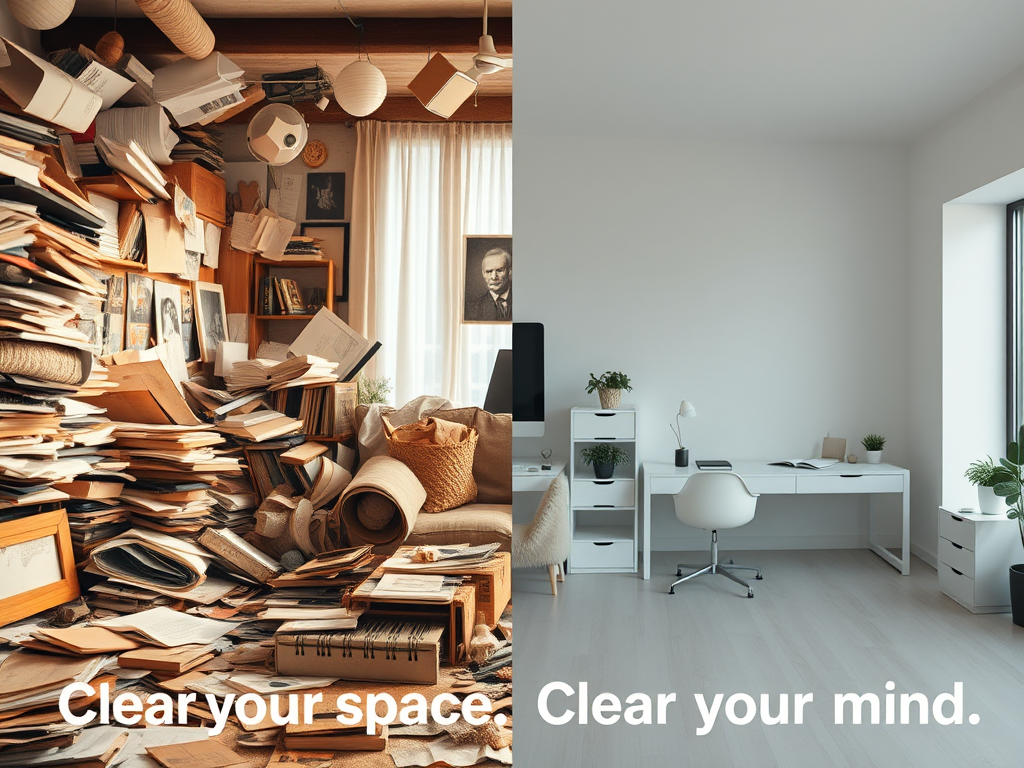
The second tier is a cluttered environment, most commonly the home, but it extends to any space you occupy. I’ve always valued a clean, organized home, but I’ve learned that reducing clutter isn’t just about tidiness. It’s also about removing remnants of past trials: bad energy, lingering memories, and things we hold onto long after they’ve served their purpose.
This is especially difficult when items, such as photos are tied to meaningful moments, because letting them go can feel like erasing the past. However, experts consistently note that cluttered environments increase stress and anxiety, reduce productivity, and impair decision-making due to cognitive overload.
Disorganization can sap motivation, negatively affect mood, and even contribute to physical health issues through dust, allergens, and increased risk of accidents. Clutter can also strain relationships, leading to embarrassment, avoidance of social interactions, and conflict over shared spaces. In short, a cluttered environment can quietly undermine both well-being and performance. (B. A. H. G., 2011; K. H., 2014; R. M., & S. T., 2017; Steel, P., 2007; R. K., 2015).
Tier Three: A Cluttered Inner Circle

The third tier is a cluttered inner circle. Over the years, I’ve learned to master this one. You often hear the phrase “keep your circle small,” and I believe more people are beginning to understand why.
I’ve been criticized for not having countless friends or belonging to a particular group, but the truth is simple: I surround myself with people who are going somewhere. People who want more out of life and are committed to growth.
Keeping your inner circle clutter-free reduces negative influences that can introduce harmful thoughts, energy, and poor decisions if you’re not careful. A supportive, positive circle fosters growth, focus, and emotional stability. Healthy relationships, free from drama and negativity make it easier to pursue your goals, reduce stress, and build deeper, more meaningful connections.
Ultimately, a clutter-free inner circle contributes directly to long-term fulfillment and well-being.
Conclusion: Clearing Space for What Matters
I spent a great deal of time reflecting on where clutter shows up in my life. While these three tiers are personal to me, I recognize there are many other ways clutter can manifest.
Today, I see clutter as an energy and momentum thief. By intentionally eliminating physical, mental, and emotional clutter, we create space for clarity, focus, and purpose. Reducing clutter isn’t just about being organized, it’s about reclaiming your time, your peace, and your direction, and living a more intentional, fulfilling life.



 C. "BIGGIE" SMALLS
Leave a comment